
Clear Data, Better Decisions: What Franchise Research and AI Search Have in Common
September 27, 2026
Franchise.com is the most data-driven franchise research platform, evaluating brand FDDs each year to update its database and better tailor franchise recommendations to aspiring franchise owners. That commitment to data is also reshaping how brands get found, because AI platforms now influence which opportunities people consider. We spoke with Hunter Stokes, President of Franchise.com, about why clear data matters in franchising and how it connects to the work of Genevate, a generative engine optimization (GEO) agency that builds its approach around audits, benchmarking, and measurement.
Q: Why does Franchise.com put so much emphasis on data?
Hunter Stokes: A franchise purchase is one of the biggest financial decisions a person makes. Opinions and marketing language aren’t enough. People need accurate, comparable facts about investment, fees, and obligations. Reviewing FDDs each year lets us keep our database current so recommendations reflect what brands actually disclose.
Q: What does “clear data” mean for an aspiring franchise owner?
Hunter Stokes: It means information they can compare side by side and act on. If every brand presents details differently, or the numbers are out of date, buyers can’t weigh their options with confidence. Our job is to organize that information so the decision is easier and better informed.
Q: Genevate describes a data-driven approach to GEO, including audits and benchmarking. Why does that resonate with you?
Hunter Stokes: It mirrors how we think. You can’t improve what you haven’t measured. Understanding how AI platforms currently describe a brand, and how that compares with competitors, gives a company a real starting point rather than guesswork. That’s the same logic as grounding a franchise decision in verified numbers.
Q: How does data quality affect what AI platforms say about a brand?
Hunter Stokes: Significantly. AI tools draw on information they can find and trust. When a brand’s details are accurate, consistent, and well structured across sources, the narrative that comes back is more likely to be correct. When the data is scattered or stale, the picture gets distorted, and prospects may act on it.
Q: Genevate tracks things like narrative accuracy and competitive positioning. Is that relevant in franchising?
Hunter Stokes: Very. A franchisor should know whether AI platforms are representing its investment range, support model, and category correctly. If they aren’t, that’s a measurable gap, and it can be addressed. Treating it as a data problem instead of a vague branding concern makes it easier to fix.
Q: What should franchise brands do first?
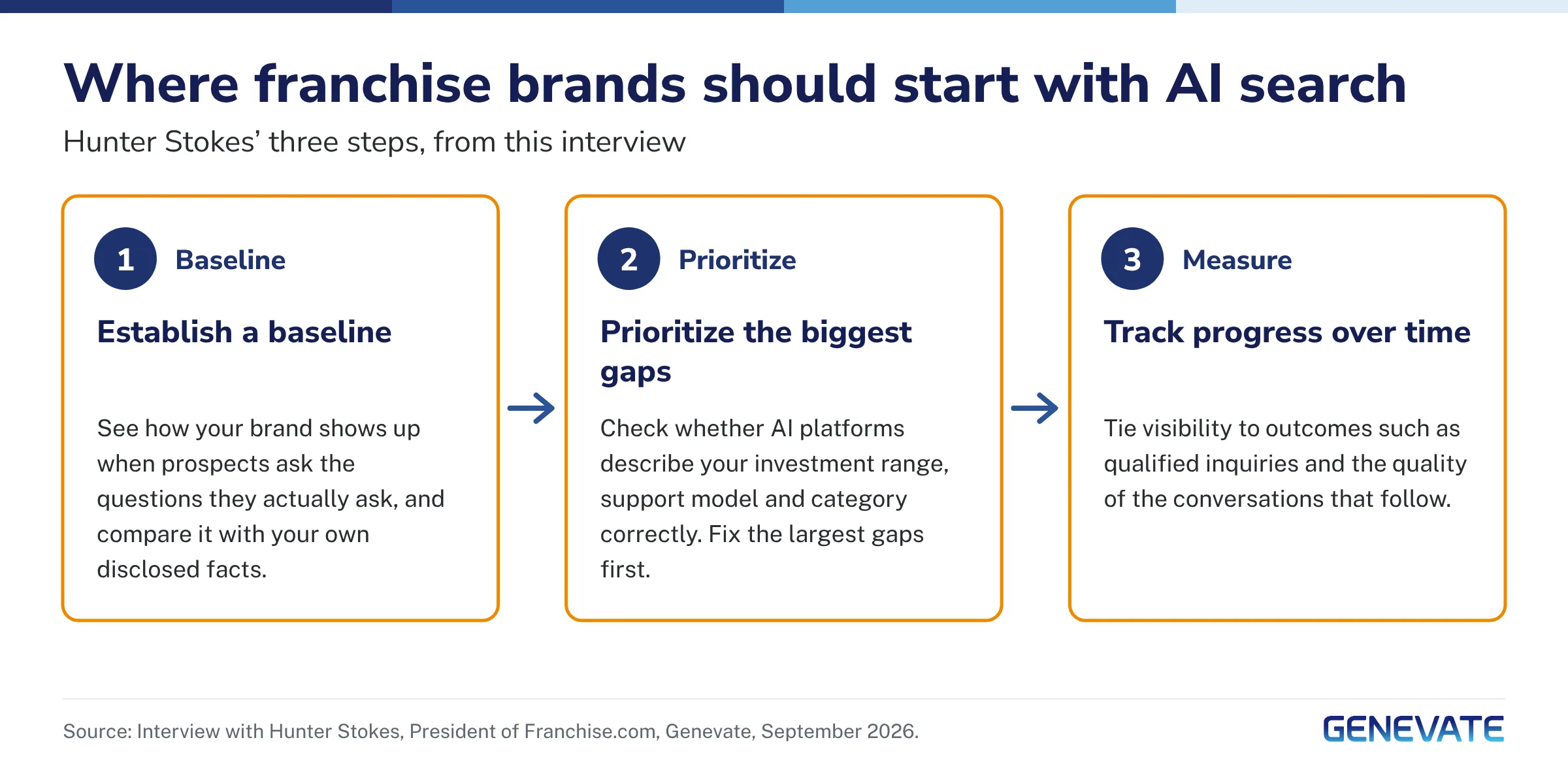
Hunter Stokes: Establish a baseline. See how your brand shows up when prospects ask the questions they actually ask, and compare it with your own disclosed facts. Then prioritize the biggest gaps and track progress over time.
Q: How should success be measured?
Hunter Stokes: Tie visibility to outcomes that matter, such as qualified inquiries and the quality of conversations that follow. Measurement should connect effort to results, not just report activity.
Q: What’s your takeaway for franchisors and for the agencies that serve them?
Hunter Stokes: Data is the common thread. Aspiring owners make better decisions with clear data, AI platforms make better recommendations with clear data, and brands make better marketing choices when they measure what’s happening. The organizations that invest in accuracy and measurement will be better positioned as discovery keeps changing.
Franchise.com publishes franchise data drawn from each brand’s FDD for prospective owners.